
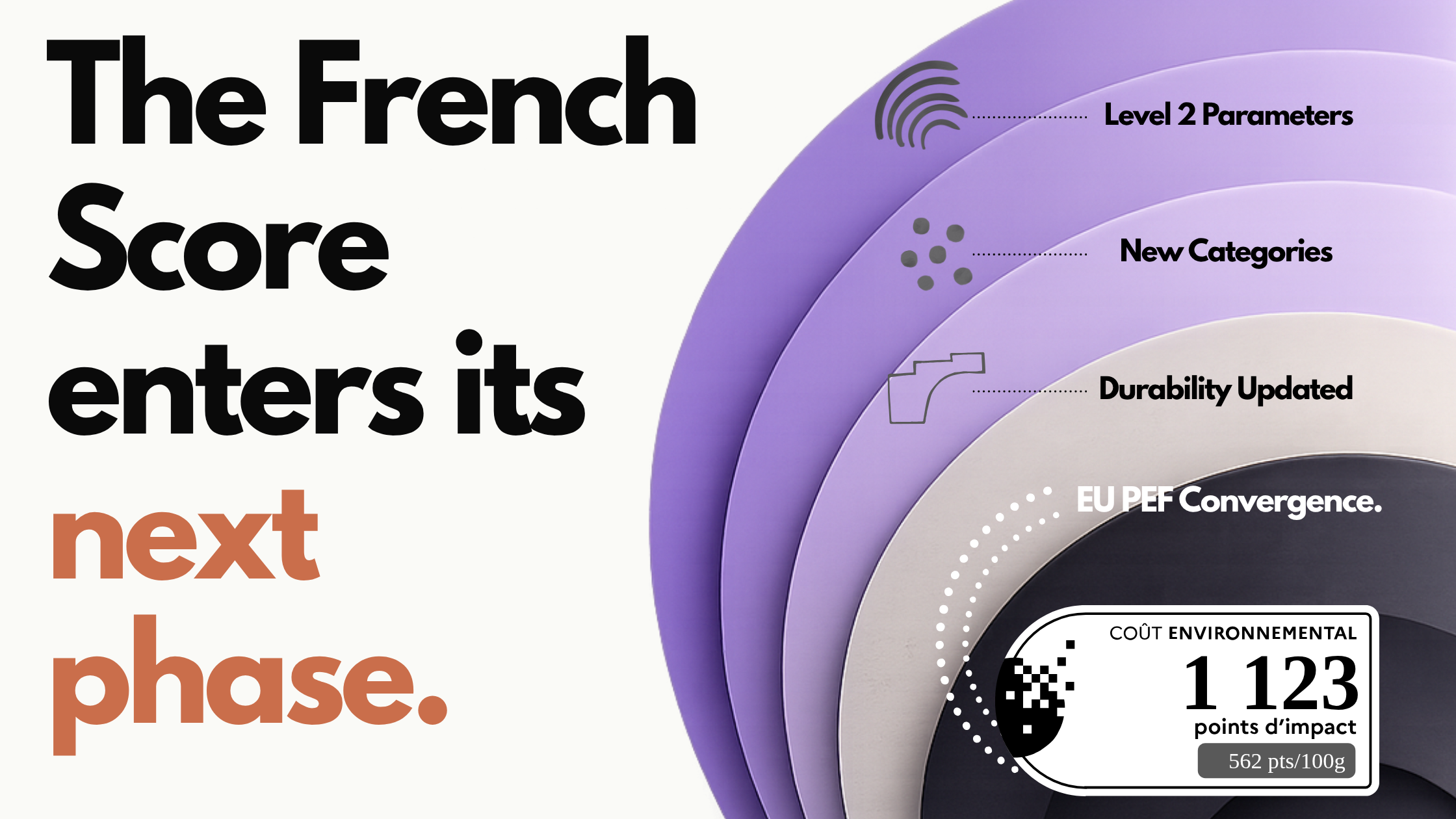
Source: ADEME co-construction webinar, 9 June 2026. Public consultation open, responses due end of June 2026.
The French environmental cost display (affichage du coût environnemental) is not standing still. On 9 June, ADEME opened a new co-construction phase and laid out the methodology and regulatory changes planned for the next 18 months. We were in the room, and this article is the plain-language version of what we heard.
One thing before we start: nothing presented is binding yet. This is a consultation. A response document is due by the end of June 2026, which means brands have a short window to shape the rules rather than just react to them.
Three tracks, three speeds
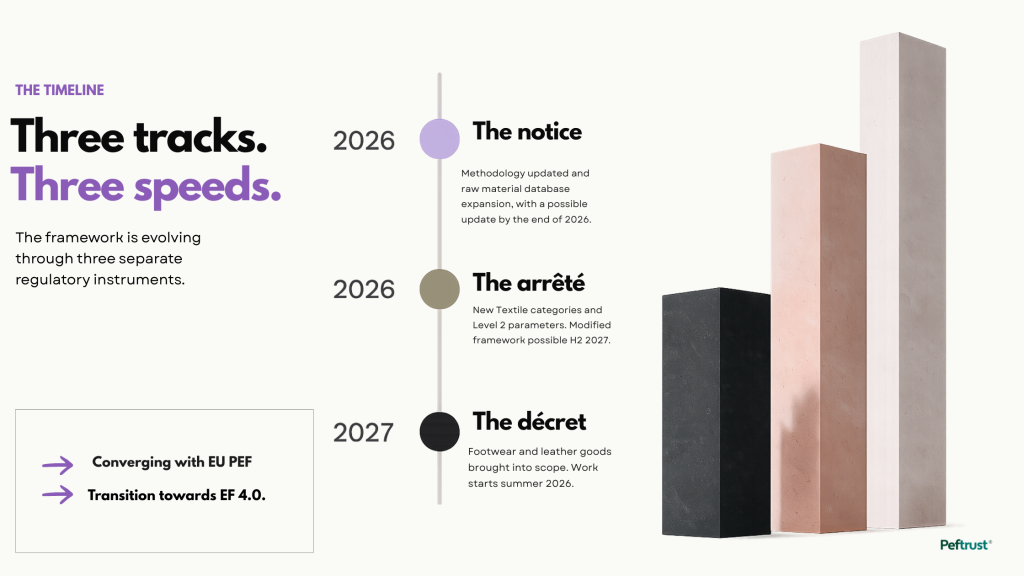
The framework is evolving through three separate regulatory instruments, and they are not moving at the same pace.
The notice:
Where it hits the fastest track. It covers methodology updates and an expansion of the raw material database, with a possible update by the end of 2026.
The arrêté:
Here is where it carries the bigger structural changes: new textile categories and the introduction of Level 2 parameters. A modified framework could arrive in H2 2027.
The décret:
This is the long game. It brings footwear and leather goods into scope, with work starting in summer 2026.
Running underneath all three is a clear direction of travel: convergence with the EU PEF, including the planned transition to the EF 4.0 impact method. A European consultation on that is still to come, but France is positioning itself to align rather than diverge.
Level 2: more data in, more accurate scores out
Today, declaring a score requires Level 1 data only: weight, composition, and traceability information. The proposal adds an optional Level 2, made up of 11 advanced parameters rolled out in two phases.
Phase 1 adds six parameters:
Yarn count, weaving or knitting process, dyeing process and stage, printing process (surface and grammage), and assembly loss rate.
Phase 2 adds five more:
Energy mix, pre-treatment and finishing, washing process, unsold goods, and leftovers.
For brands, this is the difference between a score built on category averages and a score that reflects how your products are actually made. Brands that have invested in supply chain data will be able to show it. Brands that have not will sit on default values.
Two important caveats came with the announcement. Using Level 2 will require a homologated calculation tool and a demonstrated ability to mobilise the parameters. And Level 2 is not expected to be available in Ecobalyse.
Tool homologation: the quiet headline
This is the change we think deserves more attention than it got.
Declarants will need a homologated, meaning certified, calculation tool. That applies to design offices and to brands running internal tools alike. ADEME will draft the specification together with the design offices, and verification will be carried out by an independent body. The check would be annual or triggered by a tool change, otherwise every two years.
If your brand calculates scores through a third-party platform, the practical takeaway is simple: confirm your provider’s homologation path now. If your tool cannot get certified, your Level 2 ambitions stop before they start.
The scope is expanding
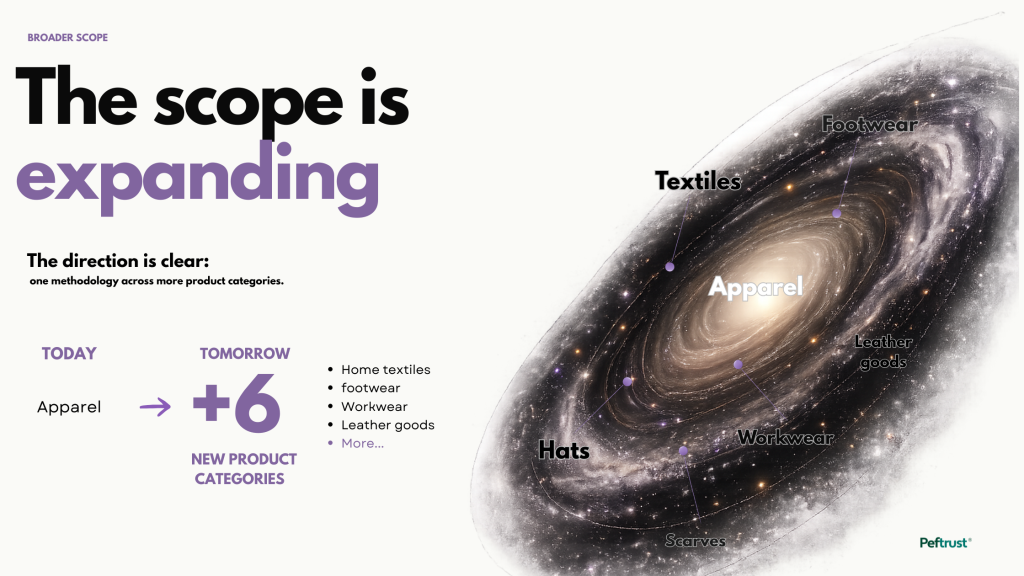
Apparel is no longer the whole story. The categories under consultation include:
- Home textiles (linge de maison), with the functional unit and modelling still under discussion, split across the TLC and EA REP streams
- Accessories: scarves, hats, caps, ties, gloves and neck warmers
- Lingerie and sports textile articles
- Professional clothing, covering PPE and corporate wear, where a 6-month pilot has already launched
- Footwear and leather goods, with work starting summer 2026 via the décret and arrêté
The direction is one methodology applied across a much wider range of products. If your assortment includes any of these categories, the scoring obligation that today only touches your apparel lines is coming for the rest of your catalogue.
Durability: two approaches on the table
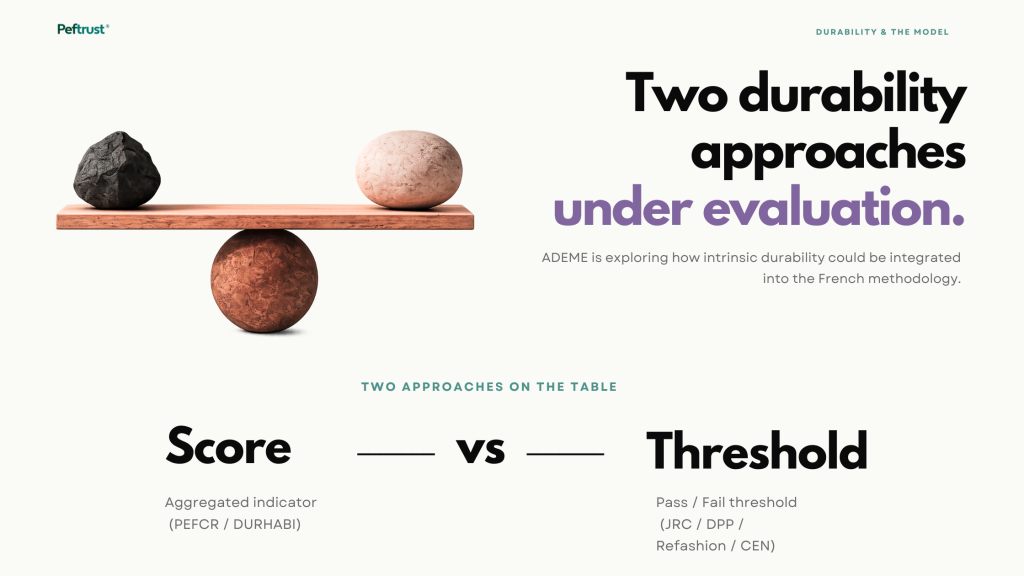
ADEME is evaluating how intrinsic durability, meaning the physical lifespan of a product, could be integrated into the methodology. Two competing approaches are under review: an aggregated, tiered indicator (in the spirit of the PEFCR and DURHABI work) or a pass/fail threshold system (drawing on JRC work for the DPP, Refashion and CEN).
How intrinsic durability will be arbitrated against extrinsic durability is still open. Options include taking the lower value, weighting the two, or weighting unless one falls below a floor. The DEX and BOND projects on extrinsic durability are ongoing.
Transverse updates worth knowing
A few changes cut across everything. Packaging will be added to the PEF-based modelling. The jeans category disappears and folds into trousers or jackets. Care conditions will be adjusted by material. New materials are entering the database, including regionalised, organic, recycled and regenerative cotton. Transport modelling becomes more granular per stage, and export outside Europe will be integrated into end of life without a coefficient.
Perhaps most significant for the long term: a single generic calculation model is planned, applicable across garments, home textiles, footwear and multi-component products.
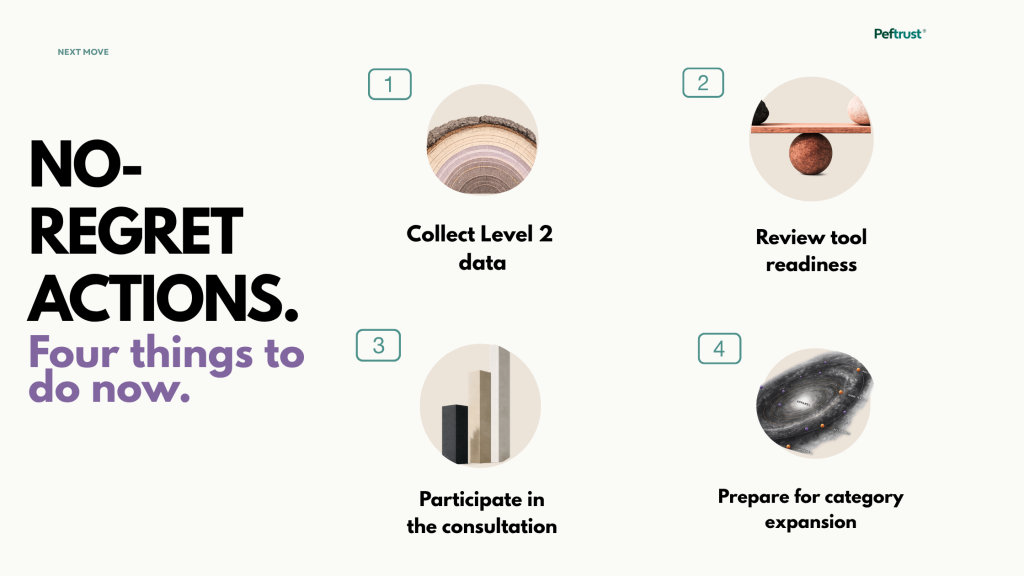
What to do now: four no-regret actions
Everything above is subject to consultation, but waiting for final texts is the expensive option. Four moves make sense regardless of how the details land.
1. Start collecting Level 2 data.
Yarn count, processes, loss rates, energy mix. This data takes time to gather from suppliers, and the brands that start now will be ready when finer scores become a competitive advantage.
2. Review your tool readiness.
Ask your calculation provider, internal or external, about their homologation path.
3. Participate in the consultation.
The response document is due end of June 2026, and working groups will follow in the coming months. This is the moment to influence the framework, not after publication.
4. Prepare for category expansion.
If you sell footwear, leather goods, home textiles, accessories or workwear, map what scoring those categories would require from your data today.
Where Peftrust fits
Peftrust’s platform is built on the French coût environnemental framework and the PEF methodology, and we follow every step of the co-construction process so our clients do not have to. If you want the full list of updates from the webinar, or a view on what these changes mean for your specific product categories, reach out to the team.
The next 18 months will reshape the French Ecoscore. The brands that come out ahead will be the ones that treated this consultation phase as the starting line.
Missed our May 27 webinar with the French Ministry?
Pascal Dagras and Camille Martin, the team behind Ecobalyse at the Ministry of Ecological Transition, joined us live to answer brands’ biggest questions about the French score, how it fits with the DPP and EU PEF, and what’s expected ahead of October 1.
Watch the full replay here:
